


The Speech of the Ambassador Celebrating 150th Anniversary of Ludvík Očenášek
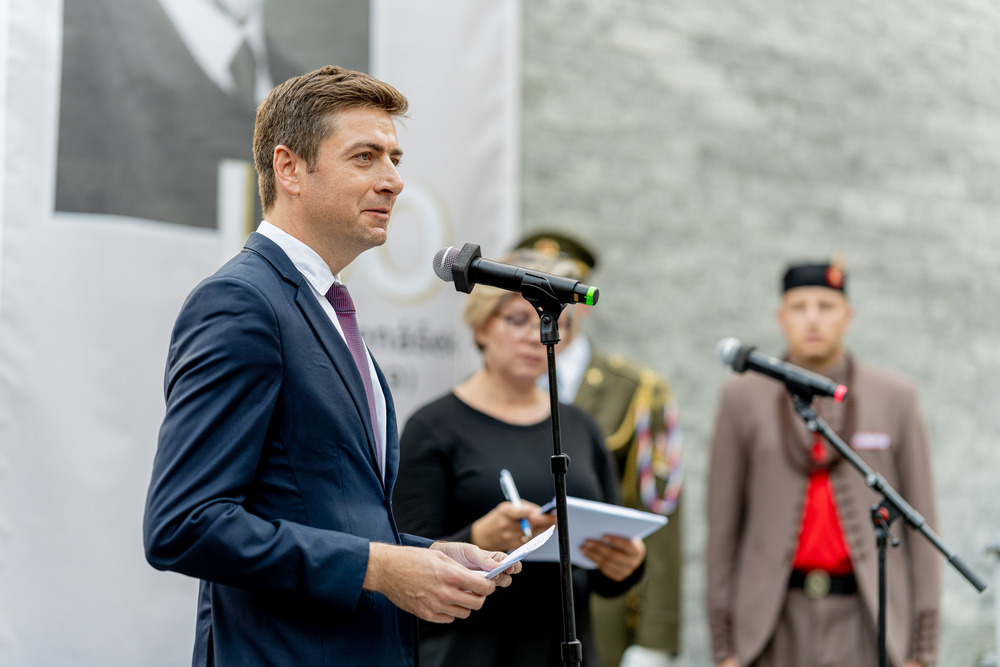
Respected Minister Balaš, Distinguished Deputy Speaker of Lithuanian Parliament, and Honorable Members of Parliament, Madam Mayor, Excellencies, Friends, Ladies and Gentlemen,
In this time of the year, the sky in my country is particularly clear and all stars seem within arm’s reach. So traditionally, after the day of hard work, people would stay in the field and hunt for a falling star. (The lights of the modern cities might have changed that tradition, but I know people who still do that). The chances of meeting a falling star is one in a million; yet if the lucky spectator meets their star, we know they are bound by destiny.
In human relations, this effect of the falling star also exists, although we rarely think of it in terms of a historical development. We normally think of history in terms of mega events that change the course of our progression. This could be war, like today’s Russia’s brutal, unjustified war in Ukraine. This could be a revolution, like student march & Velvet Revolution of 1989. This could be a grand statement, like Wilson’s 14 Points or the Schuman declaration.
But let’s think of history from an individualistic perspective. Let’s imagine we all are a history in the making. Each and every one of us live our daily lives, make our mistakes, and in between our mistakes -- probably do something good for the others. And this cumulative effect of our lives, mistakes and good deeds make the body of modern history. And then, centuries later, someone by chance picks up our individual life story and chooses to tell our mistakes and deeds to the future generations. The moment when the falling star meets its spectator and seals him or her with destiny.
I guess this is exactly what happened with our man, Ludvík Očenášek, whose 150th birth anniversary we are celebrating tonight. He was a brilliant mind who contributed to the development of progressive technologies, including the rocket science. He lived an outstanding life which already then was making it to the headlines. He was a true patriot who helped the cause of the Czechoslovak independence. It was him who tapped into the telegraph line between Vienna and Berlin at the end of World War I -- in this very spot we are standing today -- and passed on the intercepted communication to the Czechoslovak underground. All these facts were always here, on the plate; it’s only that nobody cared and our generation was ignorant.
We should therefore applaud Madam Mayor Renata Zajíčková and the team of Prague 5 for their effort to bring Očenášek to our spotlight again and make him part of our future history. What Prague 5 has delivered is amazing. To have a party tonight could have been an ambassador’s idea (what else they are capable of). But the Mayor and her team introduced a campaign that involved local schools, senior citizen organizations, and many other people and institutions who for months worked together to reconstruct the life and deeds of Ludvík Očenášek. And their energy and enthusiasm have been so unstoppable that today we too – the diplomatic corps, the members of Government, the members of Parliament, and even 36 members of the Lithuanian Air Force Brass Band – participate in the act of reinstating Ludvík Očenášek to our historical narrative of the future.
The star has finally met its man.
Let’s celebrate this night with children’s art, music, and each other’s company.
I wish you a good time tonight.


