"Post-War Europe: Different Histories, Different Lessons" – Ambassador Rolandas Kačinskas Highlights Key Lessons at Czech Senate Conference
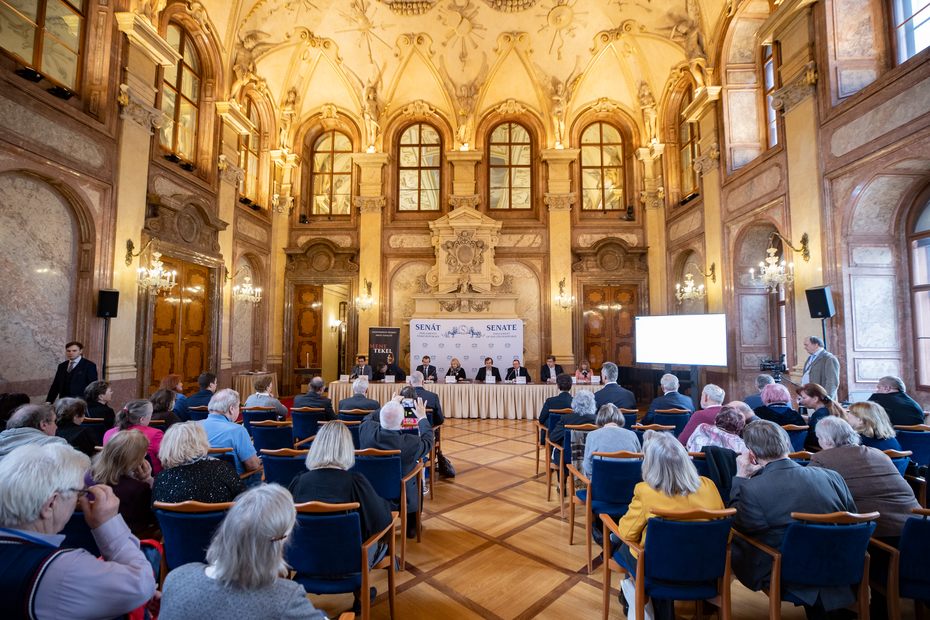
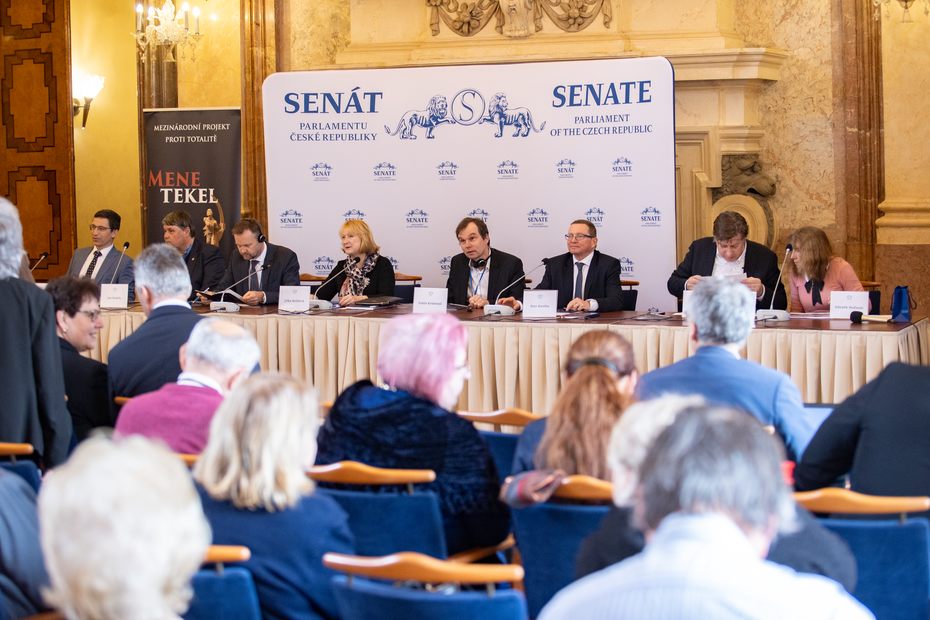
Speaking at the conference on post-war Europe, organized by the Mene Tekel project in the Senate of the Czech Republic, H.E. Rolandas Kačinskas, Ambassador of Lithuania to the Czech Republic, highlighted the importance of historical memory, the lessons from Lithuania’s post-war experience, and their relevance in the context of Russia’s ongoing aggression against Ukraine.
Reflecting on post-war Europe, Ambassador Kačinskas emphasized that it is impossible to consider the historical period without acknowledging today’s war—the Russian invasion of Ukraine. As we near the 80th anniversary of the end of World War II, he stressed the importance of resisting simplified narratives that frame the war solely as a moment of liberation. He reminded the audience that the war began with the Molotov-Ribbentrop Pact, which divided Europe.
In his speech titled “Post-War Europe: Different Histories, Different Lessons. Will We Learn Ours?”, Ambassador Kačinskas shared key lessons from Lithuania’s own post-war experience:
"While victory celebrations echoed across major European capitals, Lithuanians took to the forests to fight for their lost freedom, and the armed partisan resistance—known as the "war after the war"—continued until 1953. While Western Europe received the Marshall Plan and began to recover, Lithuania’s farmers were forcibly driven into collective farms (kolchozy). While human rights and democracy took root in Western Europe, Lithuanians were deported to Siberia. While the European integration process was underway, Lithuania was increasingly cut off from its European roots. While the West celebrated the Helsinki Principles of inviolable borders, the occupation of the Baltic states was forgotten and adjusted to fit the “new reality.”"
Ambassador Kačinskas also pointed out that for Lithuania, the period that Europe calls "post-war" only ended on March 11, 1990. In two weeks, Lithuania will mark 35 years of restored independence. He noted that freedom must never be sacrificed for the illusion of peace, adding that while the policy of non-recognition of occupation is crucial, it has its limits ("therefore we should not mislead ourselves when we offer the example of such a policy to Ukraine"). He emphasized that red lines should not be self-imposed, and that EU and NATO integration, alongside U.S. leadership, remain key in ensuring security.
"The Baltic states are a success story—for themselves, for Europe, and for the transatlantic alliance. Everything we have built together—in the Baltics, Czech Republic, Poland, and beyond—must not only be defended but strengthened," said Ambassador Kačinskas.
Security, he emphasized, requires decisive action. We must: safeguard our achievements; maintain EU & NATO unity; strengthen bilateral ties; Invest in defense—because deterrence prevents war.
"If we fail to act now, the cost will be far greater."
In his closing remarks, Ambassador Kačinskas urged Europe to confront its history and acknowledge the crimes of totalitarian regimes. He spoke of Lithuania’s continued efforts to push for the recognition and condemnation of these crimes in Europe.
"Just as we freed ourselves from Russian gas, we must also rid ourselves of ideological dependence—by ending the silence on communist crimes," he stated.
Ambassador Kačinskas concluded by stressing that different histories shaped post-war Europe, but one lesson remains universal: when the moment comes, we must act.
"That moment is now. History will judge us by our actions—or inaction."