


Lithuanian Embassy Calls for Memorial to Totalitarian Victims at GLOBSEC Forum in Prague
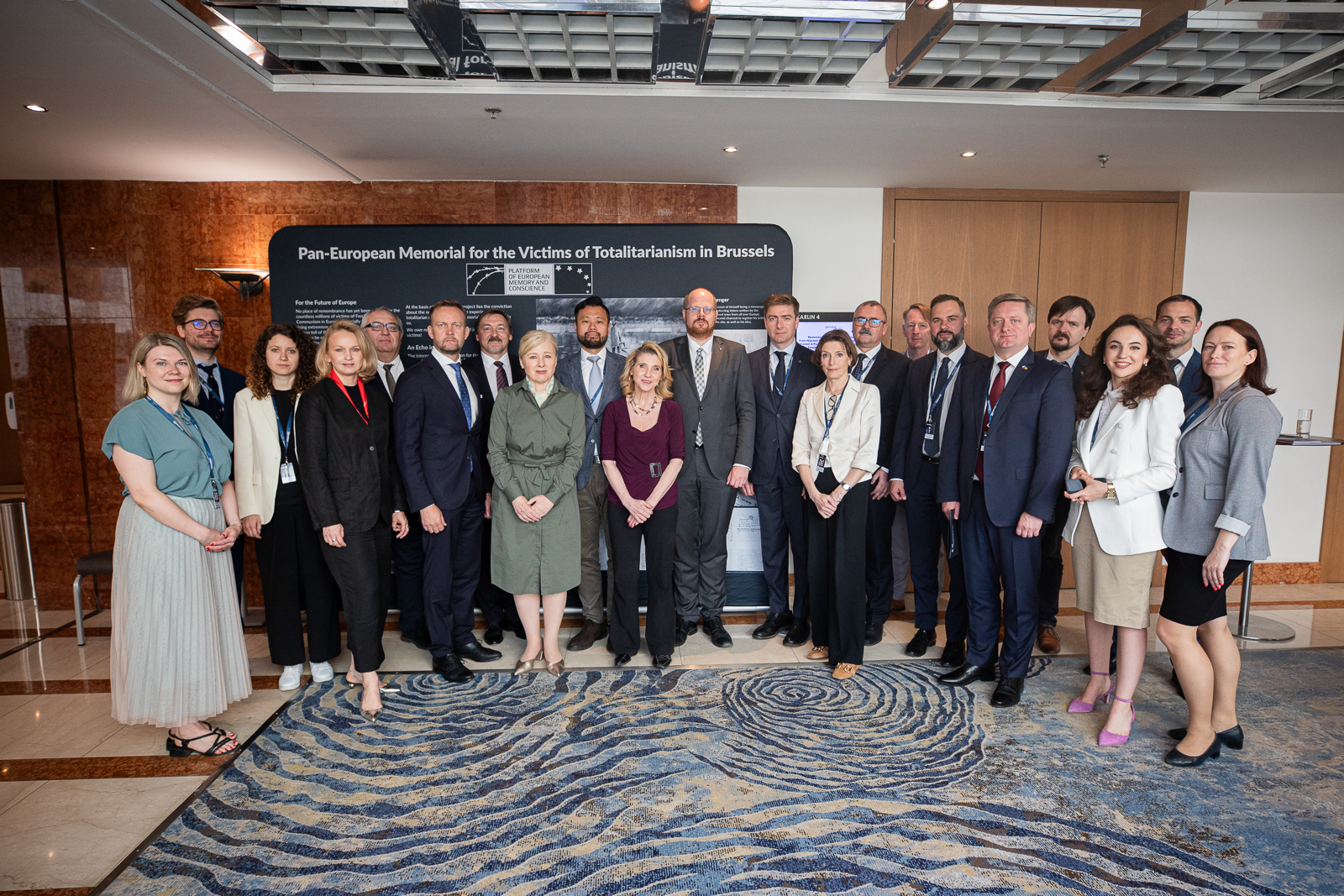
During the GLOBSEC forum in Prague, the Lithuanian Embassy, together with the Platform of European Memory and Conscience (PEMC), hosted on June 14th a high-profile event titled “Remembrance as a Form of Resistance: From Hijacked History to Child Kidnapping and Mass Graves”. The discussion highlighted the urgent need to establish a memorial in Brussels dedicated to the victims of totalitarian regimes, as a shared European response to historical distortion and a tribute to all who suffered under oppression.
The event began with a solemn commemoration of victims, with ambassadors and officials from Lithuania, the Czech Republic, Estonia, Latvia, Democratic Belarus, Poland, and Ukraine reading the names of individuals who fell victim to totalitarian regimes. Lithuanian Ambassador to the Czech Republic Rolandas Kačinskas opened the ceremony, emphasizing the importance of historical memory as a cornerstone of democracy:
“We are united by a common goal – to ensure that our historical truth remains alive and an integral part of Europe’s political and moral agenda. Memory is not merely symbolic; it is essential for understanding the present and guiding our decisions for the future.”
Historical Memory Under Threat
Panelists discussed how authoritarian regimes manipulate history for political purposes, highlighting the human cost of Soviet deportations, Nazi executions, and ongoing war crimes in Ukraine, including child abductions. Participants agreed that a memorial in Brussels should serve as a living symbol of democratic values and must be built without delay.
The discussion featured:
- Laimonas Talat-Kelpša, Director of Policy, Ministry of Foreign Affairs of Lithuania,
- Eduard Hulicius, Deputy Minister of Foreign Affairs of the Czech Republic,
- Věra Jourová, former European Commissioner,
- Marek Mutor, President of the Platform of European Memory and Conscience,
- Tszwai So, architect of the Brussels memorial project.
The session was moderated by Brussels-based journalist Teri Schultz.
Lithuania’s Leadership in European Memory
Marek Mutor praised Lithuania’s leadership in advancing historical memory on the EU agenda and expressed commitment to continued cooperation during Lithuania’s EU Council Presidency in 2027. Director Talat-Kelpša underscored the importance of confronting collective trauma to strengthen societal resilience:
“We must address these painful chapters of our shared history to heal from collective trauma. Only by reflecting on and reconciling with the past can societies build resistance to future manipulation.”
Exhibition Highlights Lithuanian Deportations
The forum also featured the exhibition “Under a Foreign Sky”, showcasing the lives of Lithuanian deportees in Siberian labor camps. Adapted for Czech audiences from the Lithuanian Genocide and Resistance Research Centre collection, the exhibition included personal stories, including that of Director Talat-Kelpša’s own family.
The event concluded with participants gathering for a group photo in front of the memorial project model, symbolizing unity and a call to action to realize the Brussels memorial.


