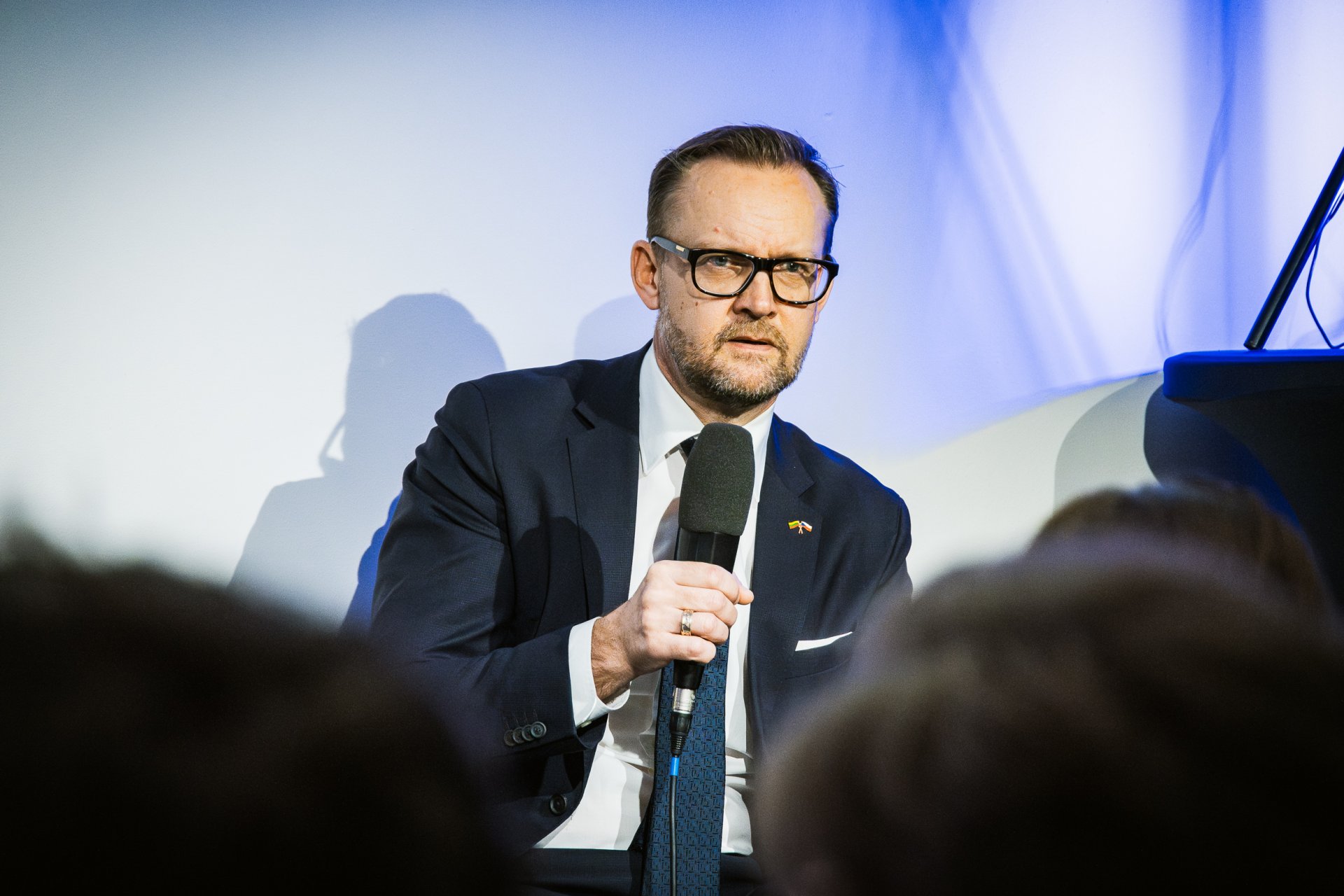
Baltic Ambassadors in Prague Share Regional Insights on Managing Contemporary Security Threats
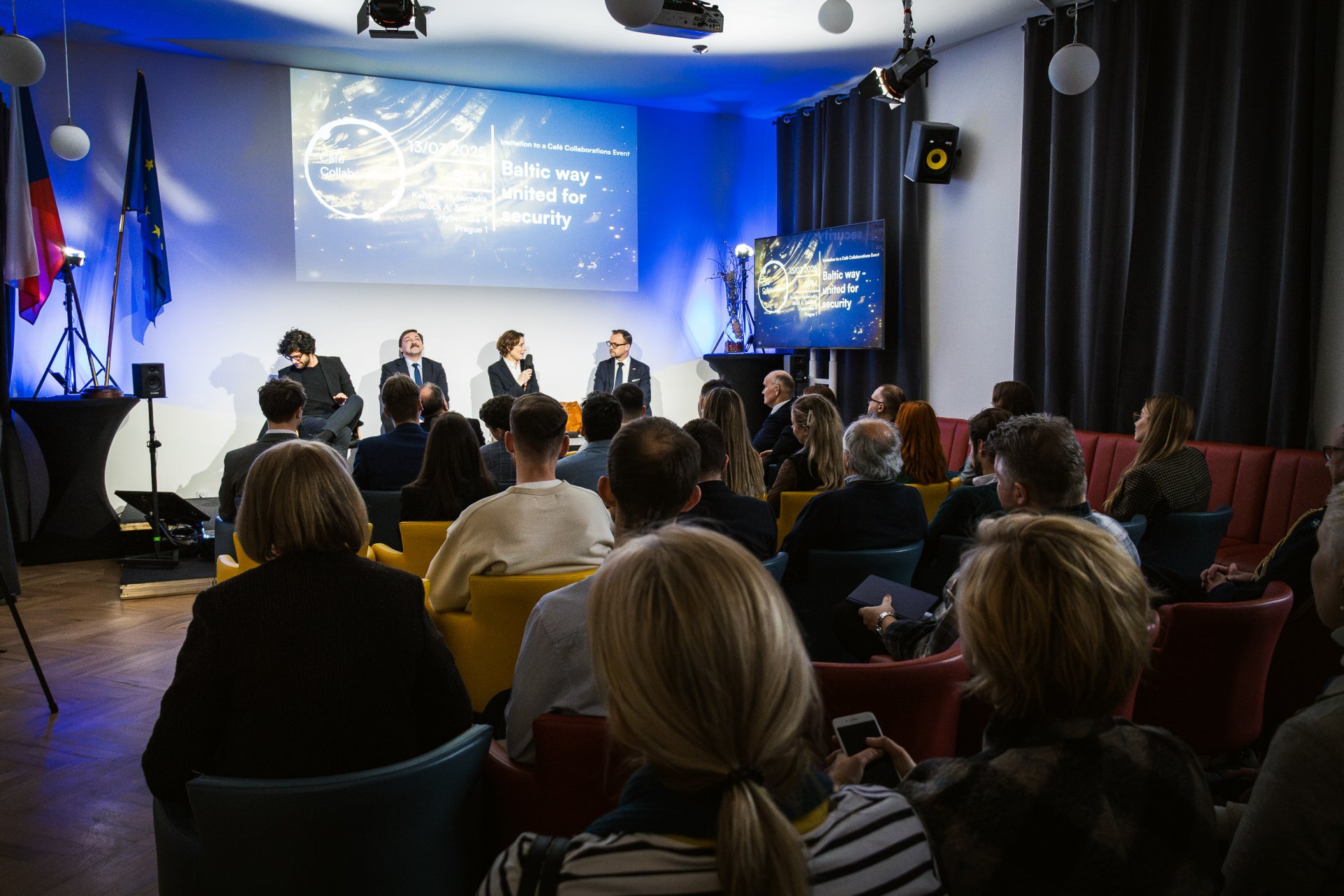
The Embassies of Lithuania, Latvia, and Estonia in Prague, in cooperation with the discussion center "Kampus Hybernská" at Charles University, hosted on March 13 a public discussion titled Café Collaborations: Baltic Way – United for Security. The event aimed to share the Baltic states' experiences in managing security threats posed by their proximity to the Russian Federation and its destabilizing actions toward the region.
The discussion featured H.E. Rolandas Kačinskas, Ambassador of Lithuania, H.E. Gita Kalmet, Ambassador of Estonia, and H.E. Vilmārs Heninš, Ambassador of Latvia. The event attracted an audience of approximately 50 participants, including students, representatives of security-focused organizations, academics, and diplomats. The discussion was moderated by Tomáš Brolík, a journalist from the Czech weekly Respekt.
Ambassador Rolandas Kačinskas emphasized the significance of sharing these experiences, especially as Lithuania has just celebrated the 35th anniversary of its restored independence. “The history of the Baltic states is not just our regional experience but a clear message about what is at stake for all of Europe. Our long-standing struggle for freedom and our ability to recognize threats today serve as valuable lessons for both the EU and NATO. This is why discussions like this are crucial—they help reinforce the understanding that supporting Ukraine is not just a moral duty but a strategic necessity for our collective security,” he stated.
The discussion covered the historical paths of Lithuania, Latvia, and Estonia toward statehood, the challenges they faced in joining European and global institutions, and their achievements since becoming full-fledged members. Participants were particularly interested in the Baltic states' success in developing digital businesses and expanding e-governance, as well as the cybersecurity challenges associated with these advancements. Key topics also included the principles of energy security, societal resilience, combating disinformation, and the importance of educating the public—especially the younger generation—on defending democracy against aggression.
The speakers highlighted that Russia’s invasion of Ukraine represents the largest and most deadly conflict in Europe since World War II. They stressed that the Baltic states’ historical experience with Russia, their stance on Ukraine’s defense, and their role in strengthening European security could help the Czech public better understand the threats to their own democracy and the security of the entire continent.